
Liveaboard Marinas: What’s It Like To Live In A Marina
There’s a big difference between liveaboard marinas and living at anchor, but it wasn’t until I actually started living on a boat that I knew you could live full time in either.
I assumed that boats were designed simply to sail, and the idea that you could live on one full time seemed crazy. Where would you put all your belongings?! How would you cope with never getting dressed standing up fully? Wouldn’t it move all the time? (Yes, yes it would)!
So why on earth would anyone want to actually live in their sailboat rather than safe and sound on dry land?
As an Amazon Associate, we earn from qualifying purchases. We also earn from other affiliate programs. This means we may receive a small commission on products purchased through our links at no extra cost to you.
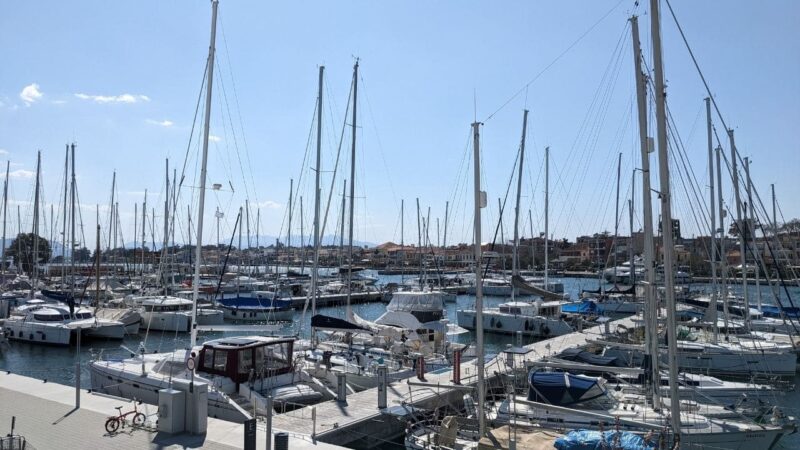
Surprisingly, there’s a huge number of people who live on their sailboats in a marina year-round. And there’s an even bigger number of people who live in marinas over winter or hurricane seasons. It’s not unusual to have a liveaboard marina as your full-time residence, and as I’ve discovered, it’s certainly not unusual to have a sailboat as your only home!
After a long winter in the marina, it’s time to delve into the ins and outs of living in one. But whether you’d want to do it yourself? Read on and find out!
What’s It Really Like In Liveaboard Marinas?

Let’s take a look at the pros and cons of life in a liveaboard marina.
The Pros Of Living In A Marina
Liveaboard Marinas Community
There is something special about the sailing or boating community. I guess it’s easy to imagine that everyone who lives on a boat is similar – perhaps someone keen to escape, someone isolated, someone rejecting the social norms.
The great thing about this community is that everyone is so, so different, and yet the same. You instantly connect with people who might not have given you the time of day (or you them!) while on land.
We’ve enjoyed dinner on million pound yachts with people who have retired at 30, and we’ve drank beer round the campfire with students who bought their sailboat for a fiver and are winging it every day to keep their adventure going as long as possible.

These people, who are nothing like us, have become incredible friends because we all share one key thing. We love this sailing lifestyle, and we hate this sailing lifestyle! We all have the same stories to tell about our toilets breaking, being stuck in a storm, wanting to throw our other halves overboard!
Even those on yachts we could never dream of affording have had to get covered in oil while fixing their engines, or know the exhaustion of all-night watches.
You do meet people when you’re out at anchor but it’s much harder. When you’re literally bumping fenders with your neighbours in a marina you can’t help but meet new people and forming those immediate bonds.
Top Tip: If you’re a liveaboard family, spending time in marinas over popular periods (like winter in the Med) is a great opportunity for your kids to make longer-lasting friends. Get on a Facebook group like Kids 4 Sail and do a little research into popular marinas for families. You might even find a teacher like me that will be happy to set up a little marina school and help you out with homeschool!
Comfort When Living In A Marina

Comfort levels either go up or down, depending on whether you’re used to living on a house or out at anchor!
Marinas tend to be a lot more sheltered than more open anchorages, so living in a marina means the boat moves around a lot less. But obviously it still moves a lot more than when you live in a house!
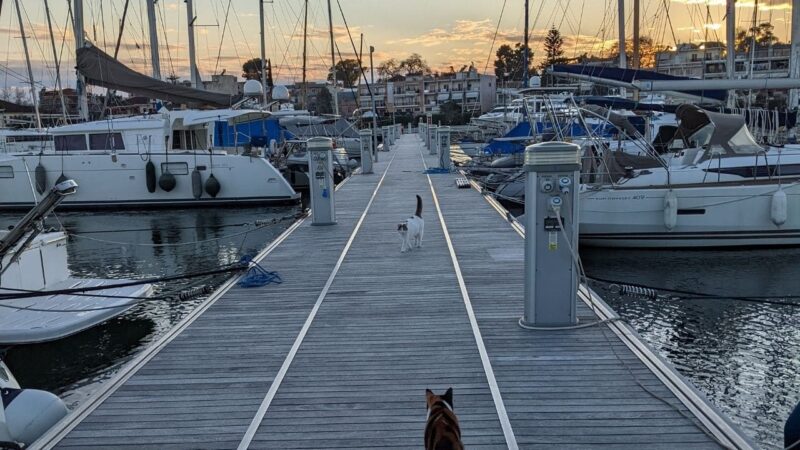
Living in a marina comes with the benefit of unlimited water and electricity, just like in a house. As long as you pay your way that is! You shouldn’t have any trouble cooking on electric, charging your devices and washing up your dishes in a liveaboard marina!
What you might not enjoy so much is having to top up your water tanks when they run low. It’s a small inconvenience that you get used to quickly, but different to living in a house where the water just flows and flows.
If you’re used to living at anchor, and being dependant on water from your tank, then living in a marina feels like pure luxury. Unlimited water without having to hunt for a marina or town quay, or filling up jerry cans from beach showers (not that we would EVER do something so homeless and desperate, honest).
Liveaboard Marina Facilities
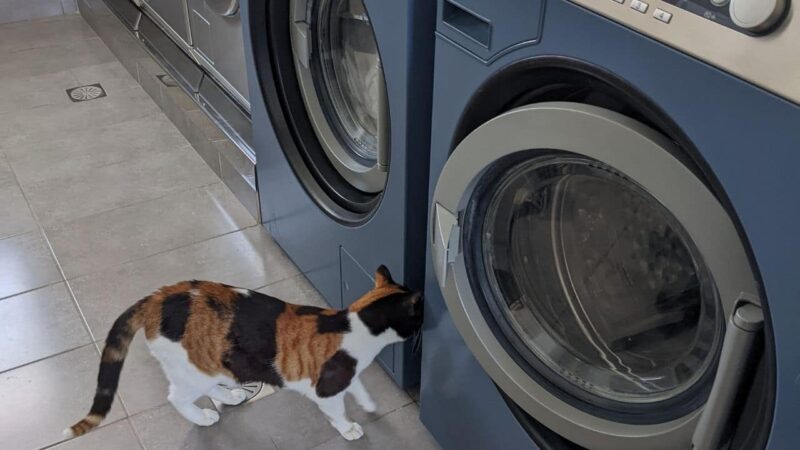
Liveaboard marinas usually come with showers and toilets, the standard of which can vary! The marina we’ve been staying in has super clean, super smart toilets and showers so taking a shower there every day has been a real treat. The water heater doesn’t rely on solar either, so there’s always boiling hot water on tap!
You might not get so lucky, and have to put up with cold showers, mouldy shower curtains and overflowing toilet bins! But on the whole you’ll find nice facilities in marinas.
Another huge bonus about staying in a marina is that they have washing machines and dryers. They’re usually super expensive, but who cares when you’ve spent 6 months living in (rarely) hand-washed clothes. Washing machines are a huge treat for liveaboards, and they get a big shout out in the pros column!
Freedom

You might think that living at anchor provides the most freedom – you can choose where to park your boat and move around freely. This is true in some ways and not so true in others!
Living in a marina means you’re tied up to a dock pretty securely, and you’re nice and tucked away from any nasty weather. Your boat is also being kept a bit of an eye on by the marina staff.
It’s a great opportunity to spend time away from the boat in the (relatively) safe knowledge that it will still be there when you get back! Leaving your boat in a liveaboard marina is a little similar to parking your car in a paid and looked after car park vs parking it on the streets!
We really enjoyed spending a whole 2 months back in the UK over Christmas, which we simply couldn’t have done if Hot Chocolate wasn’t safe and soundly tucked up in her marina berth.
Ease Of Access

When you’re in a marina you’re tied up directly to the shore. You can literally step off your boat and walk to the shops. This might sound like a crazy thing to mention to any land lubbers out there, but for us boaty folk it’s a dream.
When you run out of flour you simply put on your shoes and walk to the shops. It’s. A. Dream.
When you’re out at anchor and you run out of flour, you have to get your dinghy into the water, get your outboard on the dinghy. Make sure you’ve got spare fuel. Find the kill cord. Lock up. Dinghy over to shore. Spend a while finding somewhere safe you can tie up the dinghy. And then do the whole thing in reverse on the way back. It can take a good half a day just to pick up a bag of flour!
So you can see why walking straight onto the dockside is such a novelty!
The Cons Of Liveaboard Marinas
The Cost Of Living In A Marina
The cost of marinas is the most obvious downside, and the reason you wouldn’t catch us in dragging distance of one over the summer months. Liveaboard marinas can be INCREDIBLY expensive.
Luckily, most marinas offer special rates over the winter months in Europe, and you can sometimes also get good deals on yearly contracts. For example, the marina we’re currently moored up has cost us around £400 a month for a winter contract, but as soon as the 1st April hits we’ll be looking at paying £60 A NIGHT if we wanted to stay.
This isn’t the cheapest marina out there, but it certainly isn’t the most expensive either. And we’re in a 38ft sailboat. Price can rise dramatically for boats and catamarans bigger than us. It’s an important thing to consider when choosing your perfect liveaboard boat.
Dealing With Noise In Liveaboard Marinas

If it’s peace and quiet that you seek then it’s doubtful you’ll find it in a liveaboard marina! With so many boats packed close together, you will inevitably suffer sleepless nights over the twanging of someone’s halyard, or the squeaking of rubbing fenders.
You will also find yourself privy to many a dockside conversation! Be that on your neighbours boat when they have guests over into the evening, or from people passing by. You might well be closer to traffic and the bustle of nearby towns. Noise is never far away when you live in a marina!
Nosy Neighbours
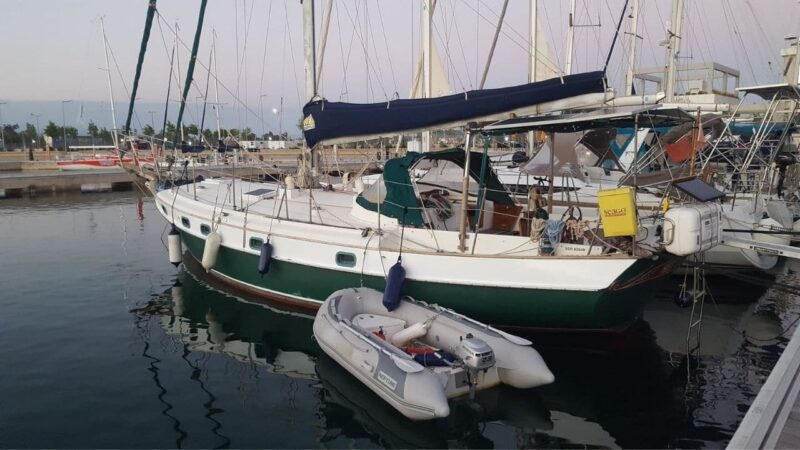
Although the sailing community is almost always amazing, you will of course find a rare few that you don’t get on with so well, just as you would in any walks of life. The trouble with being in a marina is that you can’t just move the boat if you want to escape.
You might be used to this if you live in a house, but when you live on a sailboat you’ll be spending so much time outside that if you don’t get on with the person in the boat next door it could become pretty unbearable.
Even if your marina neighbours are your new best friends, there are always time when you’d like a little solitude. This is much harder to find in a liveaboard marina, where you’ll be sort out to help someone climb the mast, or to heavy lift a new boat purchase.
Most of the time this is no problem, and you’ll appreciate the help in return when you need it, but sometimes you just want to watch the latest episode of Bridgerton in peace! Don’t expect much privacy in a liveaboard marina.
Facilities In Liveaboard Marinas
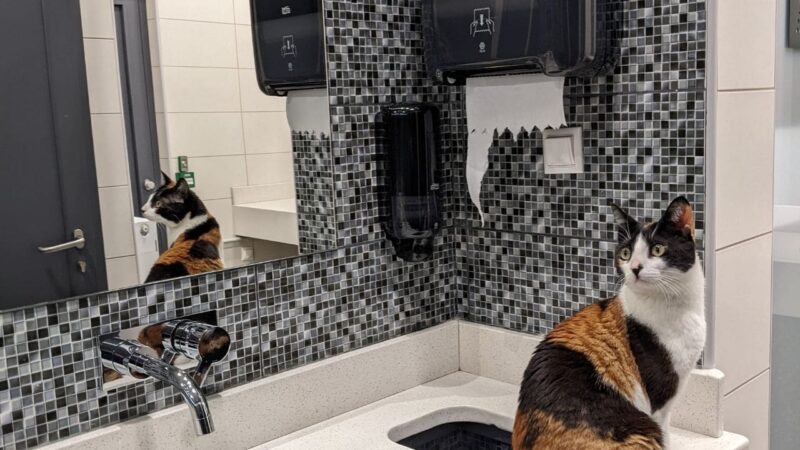
As much as the facilities are a blessing, there are also times when they’re a curse. For example, when you need the toilet at 8pm during the mother of all thunderstorms.
It’s really one step up from having a toilet at the end of your garden, and that’s a blast from the past that no one wants making a reoccurrence! Tag onto that the fact you have to remember to take a key card every time you need the loo, and you can imagine there are several pretty desperate trips to and from the toilet block when your memory does serve you well enough.
Water, Water Everywhere
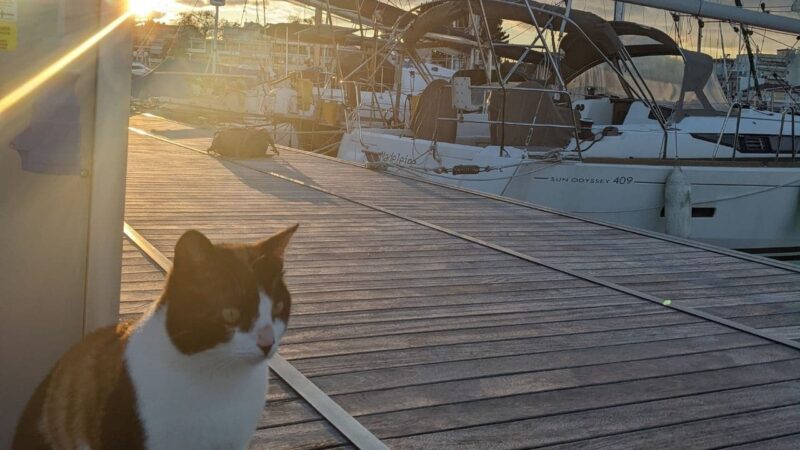
But not a drop to drink. If you’re living in a marina then it’s advisable not to use your watermaker. There are frequent oil or fuel spills in a body of water that doesn’t have much movement, so it’s best to put the watermaker to bed while you spend time attached to the shore.
This is especially annoying when you wind up in a marina that doesn’t have decent drinking water on tap. The water in the liveaboard marina we’re currently in tastes of salt. Fine for washing, not so fine for drinking. So it’s bottled water for us, and although it’s pretty cheap, it’s an added cost and added plastic that we could live without.
So what do you think? Are liveaboard marinas for you, or do you prefer living out at anchor? Or is it purely land life for you!? Let us know in the comments below, and follow us on social media.






Great post Emily, thanks for sharing your experience!
I have had a good experience with marinas in Australia, sounds like there is some variance in the Mediterranean but there are plenty of good ones out there? Salty tap water would be a bit disappointing though, I would be reluctant to fill up the tanks!
My philosophy is similar to yours, spend as much time at anchor during the summer months, with the occasional night in a marina to refill water and restock the boat, taking advantage of being one step from land.
In saying that, who really needs to pay for a marina when there are beach showers? Beach showers are essentially a modern day town well surely!
Happy adventuring!
I think I would like to try it after I get a boat. I’d need to get my 2 cats used to it also. I wonder if cellular and wifi service are spotty? if you go between living at the marina and floating further out?
This article provides an insightful look into liveaboard marinas and the unique lifestyle they offer. It’s great to see the emphasis on the practical considerations for those looking to live aboard a boat, such as amenities, marina rules, and the sense of community. The detailed comparison of different marinas really helps paint a clear picture of what to expect and how to choose the right one for a particular lifestyle.
I also appreciate the focus on the benefits of living on the water, from the peaceful environment to the close connection with nature. For those considering this lifestyle, are there any tips on how to prepare for the transition, especially in terms of adapting to the space constraints and managing daily living aboard?
Thanks for sharing such a thorough and informative guide—it’s a great resource for anyone looking to explore or embark on the liveaboard experience!