
Is Rome In Greece? Rome vs Greece
If you’re wondering is Rome in Greece then you’re not alone. Rome and Greece have been closely linked throughout history and it’s no surprise that many people question whether they’re one and the same.
Having travelled throughout Greece and Rome we’ve seen firsthand how closely linked these two places really are, and can understand why it can get a little confusing.
Looking into Rome vs Greece helps us figure out the many similarities and differences between these two distinct places and answer the question once and for all: Is Rome In Greece?
“Rome” and “Greece” are not just names on a map; they conjure images of epic tales, grand architecture, and the foundations of Western culture. In this blog post, we unravel the distinct stories of Rome and Greece, uncovering their connections, differences, and the remarkable legacies they’ve left for us to cherish.

As an Amazon Associate, we earn from qualifying purchases. We also earn from other affiliate programs. This means we may receive a small commission on products purchased through our links at no extra cost to you.
Table of Contents
- Is Rome In Greece?
- Has Rome Ever Been Part Of Greece?
- What Country Is Rome In?
- What Is The Capital Of Greece?
- The Distance From Rome To Greece
- Rome vs Greece: Differences and Similarities
- Frequently Asked Questions
Is Rome In Greece?
✔ Don’t forget your travel insurance! We use Safety Wing and highly recommend it. With insurance designed for frequent travelers and digital nomads, it ticks all the right boxes. ✔
No, Rome is not in Greece. Rome is the capital city of Italy, while Greece is a separate country located to the southeast of Italy.
It’s pretty easy to confuse the two if you haven’t visited before, because they were both places of huge historic significance. If you do get a chance to visit them both then you will realise just how different they actually are. Although interestingly we have found a lot of Roman ruins in Greece.
Rome is historically significant as the capital of the Roman Empire, and it’s known for its rich history, architecture, and cultural heritage. There are some fascinating facts about Italy if you want to delve deeper.
Greece, on the other hand, is known as the birthplace of Western civilization and democracy, and it has its own unique history and cultural contributions.
Has Rome Ever Been Part Of Greece?

In ancient history, the city of Rome was influenced by Greek culture and encountered various Greek city-states and colonies. However, Rome itself was not part of Greece.
The Roman Republic and later the Roman Empire had interactions with Greek territories, and Greek culture had a significant impact on Roman art, architecture, philosophy, and literature.
The region of southern Italy, known as Magna Graecia, was colonized by Greek settlers, and there were Greek cities and communities in this area. The city of Syracuse in Sicily, for example, was a major Greek city-state.
Additionally, during the Hellenistic period after the conquests of Alexander the Great, parts of Italy and the eastern Mediterranean were ruled by the successors of Alexander, including the Seleucid Empire and the Ptolemaic Kingdom in Egypt. These Hellenistic kingdoms had interactions with Rome, leading to cultural exchanges.
However, Rome itself was a separate entity that eventually grew to become a powerful empire, encompassing a vast territory that included parts of modern-day Italy, Europe, North Africa, and the Middle East.
What Country Is Rome In?
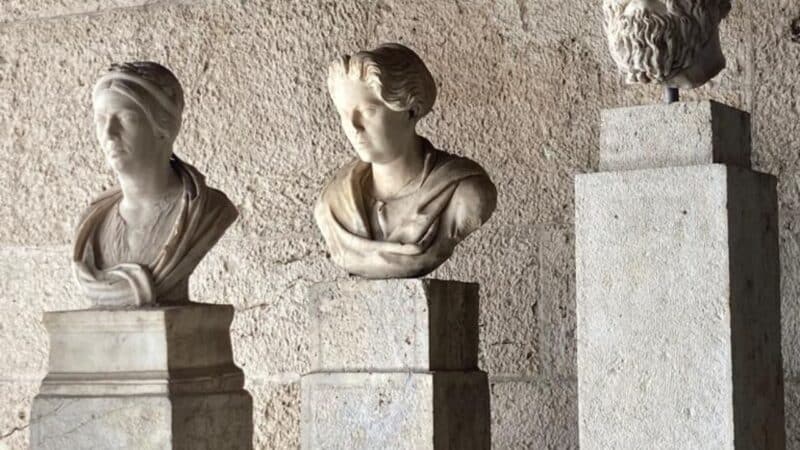
Rome is in the country of Italy. It is the capital city of Italy and is located in the central-western part of the Italian Peninsula.
Italy is a European country known for its rich history, culture, art, and cuisine. Rome holds great historical and cultural significance as it was the center of the Roman Empire and continues to be a major cultural and political hub in Italy and Europe.
What Is The Capital Of Greece?
The capital of Greece is Athens. Athens is not only the capital but also the largest city in Greece. It holds immense historical and cultural importance as one of the oldest cities in the world and as the birthplace of democracy, philosophy, and many other aspects of Western civilization.
The Distance From Rome To Greece
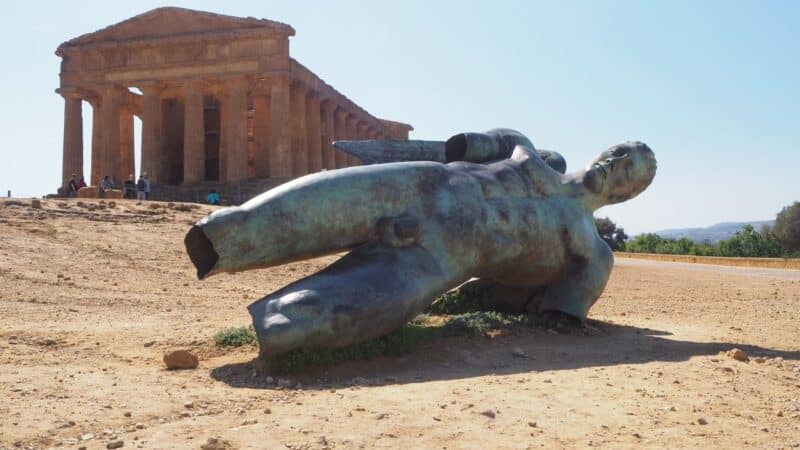
The distance between Rome, Italy, and Athens, Greece, can vary depending on the specific routes and modes of transportation used. The most common way to travel between these two cities is by air.
The approximate straight-line distance (as the crow flies) between Rome and Athens is around 800 to 900 kilometers (about 500 to 560 miles). However, the actual distance traveled by air can be slightly longer due to flight paths and air traffic routes.
If you were to drive or take other forms of transportation, such as ferries, trains, or buses, the distance covered would be significantly greater due to the geographical layout of the Mediterranean Sea and the various routes available.
We have sailed from Corfu in Greece over to Italy (not Rome) in a day, so it’s possible to get between the two countries quickly if you need to.
Keep in mind that travel distances can vary, so it’s always a good idea to check with travel providers for the most accurate and up-to-date information when planning a trip between these two cities.
Rome vs Greece: Differences and Similarities

Here are some key differences and similarities between these two places and countries that demonstrate although they are not in the same country, they do share some similarities.
Differences:
- Geographical Location: Rome is in the Italian Peninsula, whereas Greece encompasses the Greek mainland, numerous islands, and colonies around the Mediterranean.
- Language: Romans spoke Latin in the past and speak Italian now, while ancient Greeks spoke various dialects of the Greek language and now speak Greek.
- Political Systems: Rome evolved from a monarchy to a republic and eventually into an empire. Greece consisted of various city-states, each with its own political structure, such as Athens’ democracy and Sparta’s oligarchy.
- Government: Roman governance was characterized by a strong central authority, while Greek city-states maintained more independent governance.
- Cultural Contributions: While both civilizations made significant cultural contributions, ancient Greece is often considered the birthplace of philosophy, drama, and other artistic and intellectual pursuits, while Rome is known for its legal and engineering innovations, architecture, and administrative systems.
- Religion: The Romans had a polytheistic belief system, borrowing and adapting gods from various cultures. Ancient Greeks also practiced polytheism, with gods like Zeus, Athena, and Apollo playing important roles.
Similarities:
- Influence: Ancient Rome was heavily influenced by Greek culture, adopting elements of art, literature, philosophy, and religion.
- Architecture: Both civilizations contributed to architectural advancements. Ancient Greece is known for the Doric, Ionic, and Corinthian orders, while Rome’s architectural achievements include the arch, the dome, and the aqueduct.
- Trade: Both civilizations engaged in extensive trade networks, contributing to the exchange of goods, ideas, and cultures across the Mediterranean.
- Military: Both Rome and Greece had powerful military forces that played crucial roles in their respective histories and expansions.
- Artistic Achievements: Both civilizations produced remarkable artworks, including sculptures and pottery, showcasing their artistic skills and cultural values.
- Literature: Both civilizations produced influential literary works. Ancient Greece gave us epic poems like the Iliad and the Odyssey, while ancient Rome produced works like Virgil’s Aeneid.
In summary, while Rome and Greece were distinct civilizations with their own unique characteristics, they also shared similarities due to geographical proximity, cultural interactions, and historical influences.
The interplay between these two civilizations contributed to the rich tapestry of Western history and culture and continues to do so today.
Frequently Asked Questions
Here are some of your most common questions answered!
What Part Of Italy Is Greece?
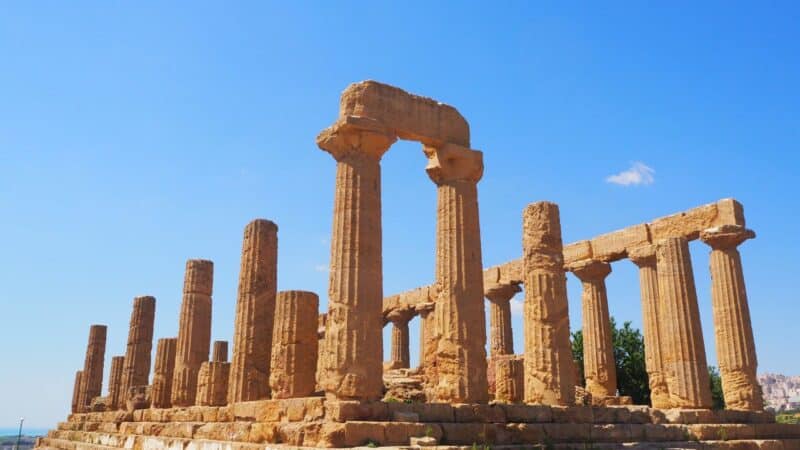
Greece is not located within Italy; it is a separate country located to the southeast of Italy. Greece is situated on the southern tip of the Balkan Peninsula in southeastern Europe. It is bordered by Albania to the northwest, North Macedonia to the north, Bulgaria to the northeast, and Turkey to the east.
The country has coastlines along the Ionian Sea to the west and the Aegean Sea to the east. Italy, on the other hand, is a distinct country located to the west of Greece, separated by the Ionian Sea and the southern Adriatic Sea.
Is Greece A Country In Italy?
No, Greece is not a country in Italy. Greece is a separate and independent country located in southeastern Europe, while Italy is a separate country located in southern Europe.
Greece has its own government, culture, history, and territory, and it is not part of Italy. They are two distinct countries with their own borders, capitals (Athens for Greece and Rome for Italy), and identities.
It’s interesting that the two places do share some architecture and history being so close to each other, but when you visit you realise they really are totally different. A different culture, different food, different landscapes and different languages.
Where To Visit, Italy or Greece?
Both Italy and Greece are incredibly popular travel destinations, each offering unique experiences and attractions.
The choice between visiting Italy or Greece depends on your personal interests, preferences, and what kind of experiences you’re seeking. Honestly, it would be impossible to give you a preference having spent considerable time in both.
Here’s a brief overview of what each country has to offer so you can make your own decision:
Italy:
- Rich History and Culture: Italy is home to iconic historical sites such as the Colosseum in Rome, the ancient city of Pompeii, and the Renaissance art and architecture of Florence.
- Culinary Delights: Italian cuisine is renowned worldwide, offering a wide range of delicious dishes, including pasta, pizza, gelato, and regional specialties.
- Diverse Landscapes: From the romantic canals of Venice to the picturesque Amalfi Coast, the stunning beauty of Tuscany, and the historical cities of Milan and Naples, Italy offers a diverse range of landscapes and cities to explore.
- Art and Architecture: Italy boasts some of the world’s most famous artworks, including Michelangelo’s David, Leonardo da Vinci’s Last Supper, and works by Botticelli, Raphael, and Caravaggio.
Greece:
- Ancient History and Mythology: Greece is the birthplace of democracy, philosophy, and ancient mythology. You can explore historical sites like the Acropolis in Athens and the Palace of Knossos in Crete.
- Beautiful Islands: Greece is known for its stunning islands in the Aegean and Ionian Seas. Santorini, Mykonos, Rhodes, and Crete are just a few of the popular destinations known for their beaches, crystal-clear waters, and charming villages.
- Mediterranean Cuisine: Greek food includes healthy Mediterranean dishes like souvlaki, moussaka, and fresh seafood. Dining in Greece often includes enjoying meals with beautiful sea views.
- Outdoor Activities: The Greek landscape offers opportunities for outdoor activities such as hiking, sailing, and exploring ancient ruins in natural settings.
Ultimately, both countries have a lot to offer, and your choice may depend on factors like your interests, preferred type of vacation (historical, beach, cultural, etc.), and the amount of time you have for travel.
Many travelers choose to visit both Italy and Greece to experience the best of both worlds. If you have the time then we thoroughly recommend it, as we adore both countries!
Conclusion: Is Rome In Greece?
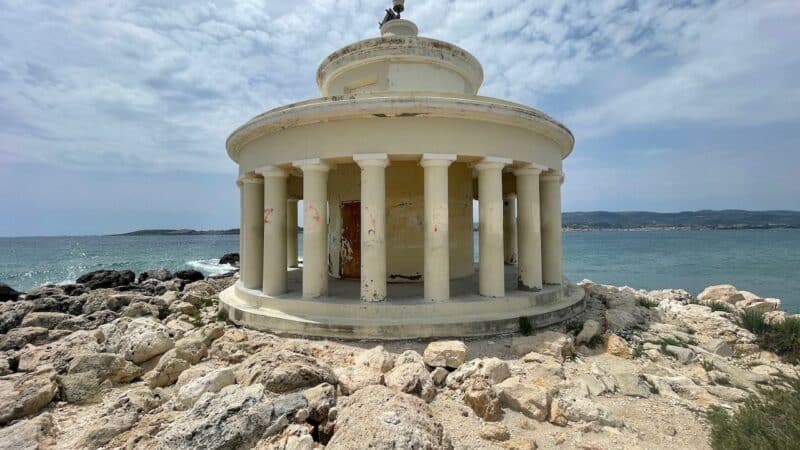
In conclusion, Rome and Greece are distinct entities, each holding its own historical, cultural, and geographical significance.
Rome, the capital city of Italy, stands as a testament to the grandeur of the Roman Empire, showcasing architectural marvels like the Colosseum and the Roman Forum.
Greece, on the other hand, boasts a rich heritage as the birthplace of democracy, philosophy, and the Olympic Games, with iconic landmarks such as the Acropolis and the Parthenon.
While Rome was never part of Greece, it’s important to acknowledge the deep interplay between these two civilizations. Rome’s admiration for Greek culture led to the assimilation of many Greek artistic and intellectual elements into Roman society, leaving an indelible mark on the course of Western civilization.
Whether you’re captivated by the grandeur of Roman architecture or drawn to the philosophical depths of ancient Greece, each destination offers a profound glimpse into humanity’s shared history and the incredible achievements that continue to inspire us today.
So, whether you choose to roam the streets of Rome or traverse the landscapes of Greece, you’re sure to be immersed in a world of captivating history and timeless beauty.