
Do Sailors Get Seasick?
Since sailors spend so much time out on the open sea, it’s natural to wonder if they get seasick. The truth is, there is no one answer to that question. Some sailors never get seasick, while others are susceptible to motion sickness under just about any condition.
Just because you suffer from seasickness, it doesn’t mean you can’t become a sailor, or even live aboard a sailboat. In fact, for every couple we meet living aboard, at least one of them usually suffers from seasickness!

As an Amazon Associate, we earn from qualifying purchases. We also earn from other affiliate programs. This means we may receive a small commission on products purchased through our links at no extra cost to you.
If you’re one of the lucky sailors who have never suffered from seasickness, count your blessings! For the rest of us, it’s a never-ending battle to keep our lunch down.
But how common is seasickness, really? And what can we do to prevent it? Read on for tips on how to stay healthy and comfortable while sailing.
How Common Is Seasickness?

It is estimated that around 1 in 3 people experience motion sickness at some point in their lives.
When we took our sailing qualifications, our examiner told us there’s a sea state and a hull shape for everyone. He meant that in the right (or rather wrong!) conditions, or on certain boats, anyone can get seasick. I don’t know if this is true but I’m hoping not to find out!
If you experience motion sickness in a car when you’re more likely to experience it on a boat, but the two don’t necessarily go hand in hand. Women and children aged two to 12 are also most at risk. Still, the condition can affect anyone.
Seasickness is more common in those who are not used to being on boats. Sometimes you can experience seasickness for hours or even days and then it will wear off!
As we said before, close to half the sailors we meet at sea experience seasickness at some point, some of them pretty severely. Once you find a way to manage your seasickness you can prevent it in most cases.
If you do experience motion sickness don’t let it put you off sailing – Adam suffers badly, but with the help of tablets living aboard is still his dream lifestyle.
What Causes Seasickness?

Seasickness is a common affliction among sailors. While it can occur at any time, it is most prevalent in rough seas.
Many people believe that seasickness is caused by the motion of the boat, but this isn’t actually true. Rather, it’s the result of conflicting signals that are sent to your brain.
When you’re on a boat, your eyes see one thing (the stable horizon) and your inner ear senses another (the rocking of the boat).
This confusion causes the symptoms of seasickness. fortunately, there are ways to prevent or treat seasickness. Let’s take a look at some of them.
How Do Sailors Prevent Seasickness?

Sailors have been trying to prevent seasickness for years, as it really is one of the worst feelings. Unfortunately, there is no one size fits all when it comes to the best preventative measures for seasickness. If you suffer then it might just be a case of trial and error until you find something that works.
There are a few things you can try to prevent seasickness, and it’s worth trying combinations of them too:
Take seasickness tablets several hours before you leave
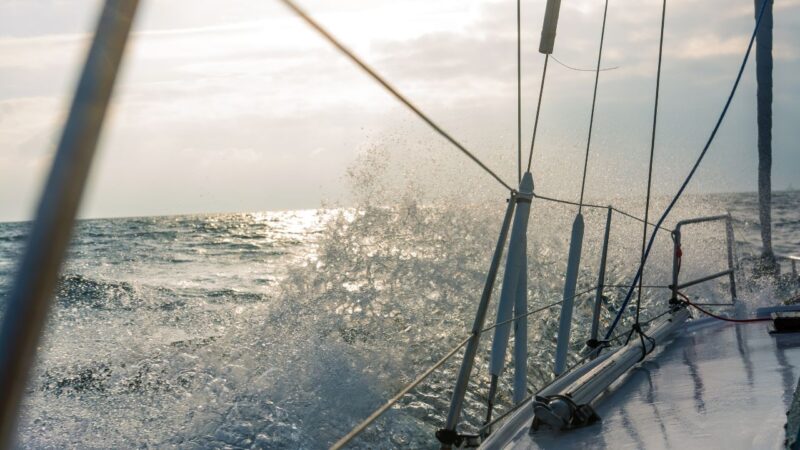
This is most people’s chosen method of preventing seasickness because it usually does work. There are several different brands of motion sickness tablets, and again, some might work for you while others may not.
Adam swears by Stugeron and has to take some before any of our longer trips. Dramamine is another very popular brand.
Use seasickness bands
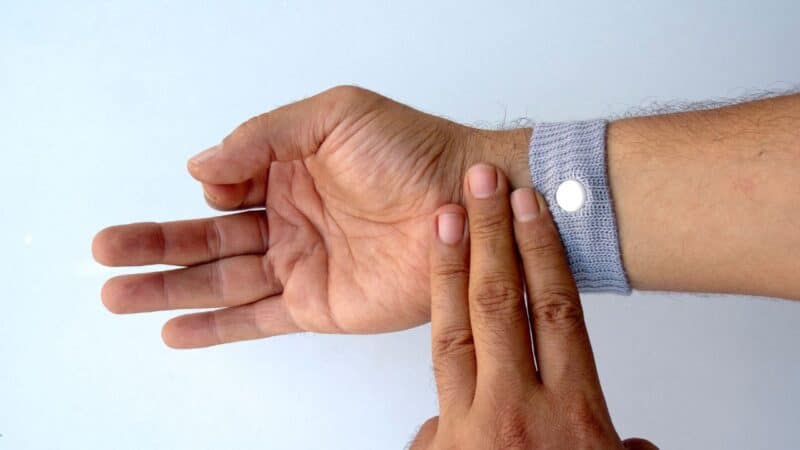
Seasickness bands work by applying pressure to the P6 point, which is located on the wrist. The pressure helps to relieve nausea and vomiting by stimulating the median nerve.
The bands can be adjusted to apply more or less pressure, depending on the severity of symptoms. Some people find that wearing the bands on both wrists is more effective than wearing them on just one.
Some people have more than others with seasickness bands, so it’s worth trying for yourself to see how you get on! We recommend these, they’re cheap but effective.
Use seasickness patches

You’re usually advised to place these small patches (similar to plasters) behind your ears.
Seasickness patches work by releasing a small amount of the drug scopolamine into your body through your skin. Scopolamine is an antihistamine that works by blocking the action of a chemical in your body called acetylcholine.
This chemical is responsible for many of the symptoms associated with motion sickness, such as nausea and vomiting. By blocking its action, seasickness patches can help to relieve these symptoms.
There are a few different brands of seasickness patches available over the counter, such as Dramamine and Transderm-Scop. They are typically worn for several hours before exposure to motion and then removed once the person feels better.
We’ve seen lots of success with these seasickness patches but make sure you read up on possible side effects before using these.

There are lots of others ways to help prevent seasickness but these methods are less medical and more about tried and tested methods that have worked for others. If you know you suffer badly with seasickness then trying some or all of these methods is a great idea.
- Get plenty of rest before your trip
- Avoid anxiety. Prepare well the night before departure
- Aviod eating spicy or greasy food the night before
- Eat a light meal before boarding (a lot of people swear by crackers!)
- Avoid drinking alcohol
- Avoid caffeine
- Sit in the middle of the boat where there is less movement
- Don’t go down below while underway
- Don’t read or similar while underway
- Look at the horizon and breathe deeply and slowly
- Take the helm (which has the same effect as watching the horizon)
- Eat ginger before and during a trip. You can buy dried ginger sweets or sip ginger tea.
- Drink plenty of fluids
- Stay out of the sun, and use a damp towel on the forehead to keep cool
Remedies For Seasick Sailors

As listed above, there are a variety of things you can do to help prevent seasickness, but if you do start feeling ill, there are also a number of remedies that can help.
Lying down above deck. Lying flat on your back and closing your eyes (or even having a little nap) can help prevent seasickness from properly kicking in. If you feel it starting then try to get your head down for 20 minutes or so.
Eating something plain, like dry crackers. If you can stomach the thought of eating something when you first feel seasick then do it!
Suck on ginger sweets. Sometimes sucking on ginger-flavoured hard-boiled sweets or the sugar-coated chunks of dried ginger can help settle your stomach, though Adam has had mixed success with this.
Don’t go below! Whatever you do, stay above decks.
What If Sailors Do Get Seasick?
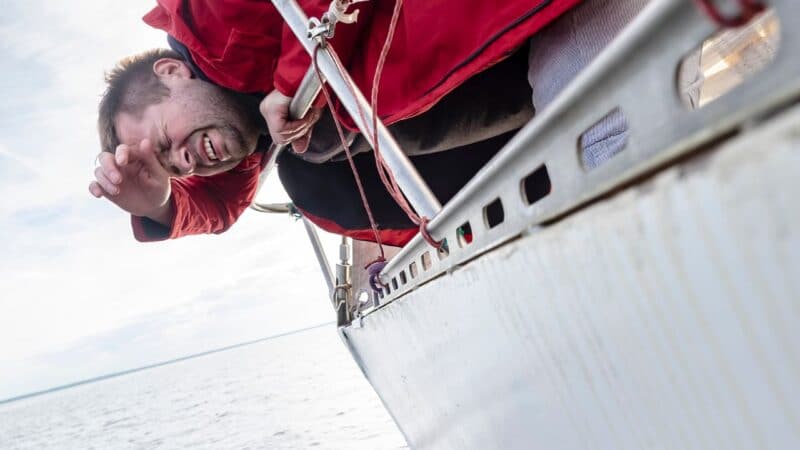
Unfortunately sometimes seasickness is unavoidable, and apparently, it is the worst feeling in the world. Adam says when he feels seasick he wants to die, and can’t imagine ever feeling better.
There are a few things you should do if you do experience seasickness to help keep you safe at sea.
The number one thing to make sure of is that you stay on the boat! It’s tempting to be sick over the side of the boat, and while this is a great idea in theory, you’ll want to be sure it’s safe to do so.
It would be easy to fall overboard while hanging over the side of a railing, and people are likely to give you privacy while you’re not feeling well. Make sure you’re only sick over the side of a boat when you’re tethered in and you have someone watching out for you.
Use a bucket above decks. Try to avoid going below at all costs, as it’s likely to make you even sicker. Instead, try to get your head down in the cockpit with a bucket at the ready!
Drink plenty of fluids, especially if you’re sailing in warmer climates. You might even consider using a rehydration tablet to make sure you don’t suffer from dehydration and become even sicker.
One last thing, if you’re going to sick overboard then it’s polite to pick a spot facing downwind! No one wants a lasting reminder of your misfortune! Make sure it ends up in the sea rather than all over the boat (or an unsuspecting crew member!)

Hopefully you never have to experience the awful curse that is seasickness. Emily never has! But if you know that you do then you have a long list of things to try that will hopefully work to prevent it from happening too frequently.
And remember, you’re not alone! There are plenty of people out there sailing the great blue with seasickness, and loving it anyway.
Make sure you follow us on social media for more sailing tips and tricks! We’d love to have you along for the ride.